

Let’s talk about the Forever 21 cycle, because I lived it. You know the one: you buy the cute thing, it lasts two washes, it pills, it fades, it dies… and then you go right back and buy another version of the same thing. Rinse and repeat.
I spent most of my 20s broke. Not “broke” like a fun little bit. Broke like undergrad-then-grad-school, living entirely off student loans broke. So trust me, I get the instinct to buy the cheap thing. When you don’t have disposable income, “quality over quantity” sounds like something rich people say to other rich people.
Except here’s the plot twist: buying quality is what actually got me out of broke-girl spending habits. Not into them.
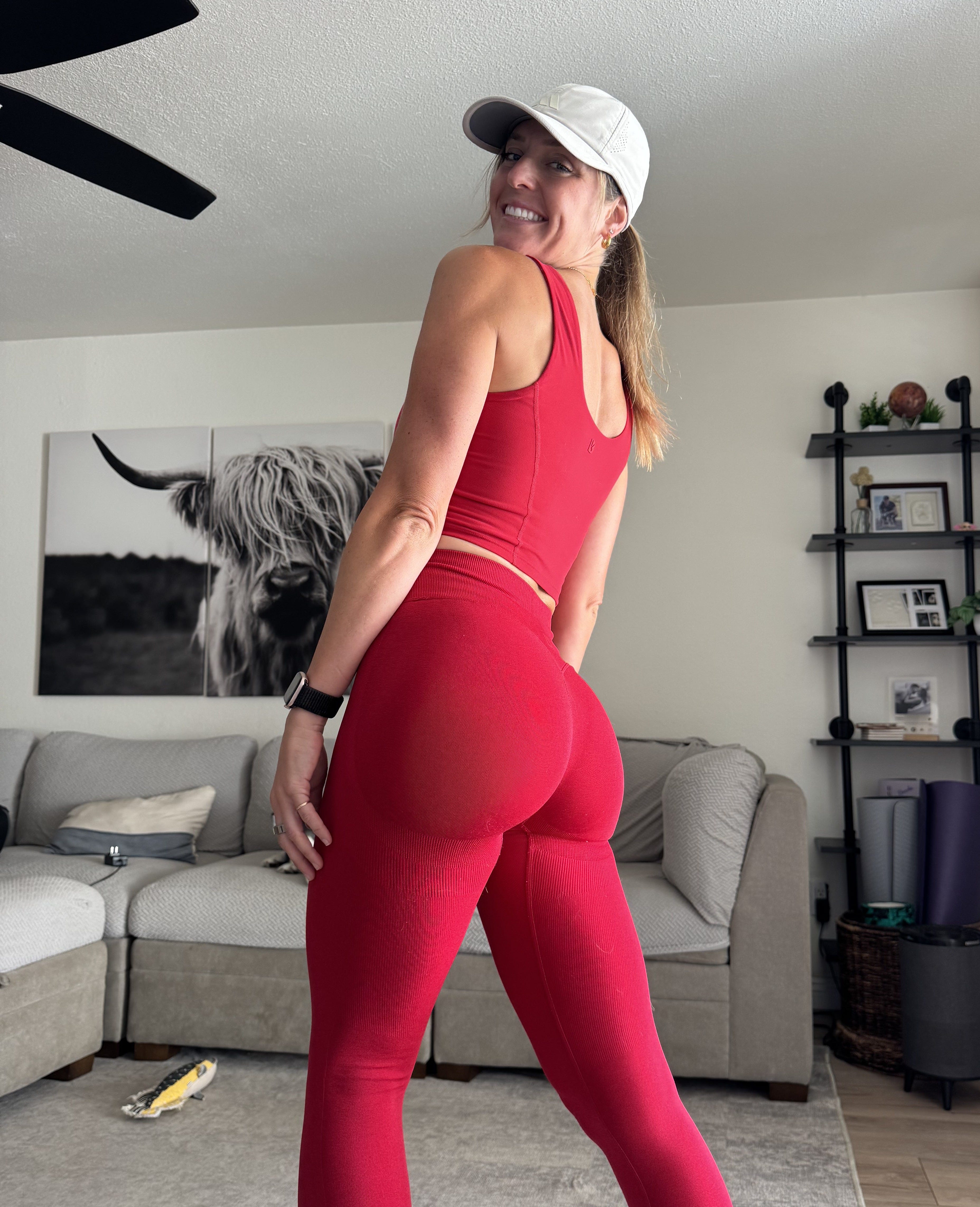
The $50 leggings that changed everything
Let me tell you about my first pair of Lululemon leggings.
It was my last year at Cal Poly Pomona (go Broncos 🐎), and I was a certified gym rat (so much so that I even worked at the rec center on campus). I had never owned a pair of Lululemons. But that Black Friday, leggings were $50 across the board, and I’d saved up enough. I bought them on my way to my second job (which was as a suite attendant at the Rose Bowl, so you can say I was extra motivated that shift to make a lot in tips 😂). I walked out with my first “nice” pair of leggings. Part of me was excited, the other part had crippling anxiety knowing I spent 50 whole dollars on them and not really sure if it was worth it 😄
That was 2016.
It’s now 2026. I still have those leggings (I even ran a half marathon in them in 2023 😂)

This isn’t a Lululemon ad (though respect for making a $50 pair of leggings that have survived a full decade). It just taught me a lot. I learned that spending more up front can mean spending less overall and that the way you think about money greatly affects how much money you make. I don’t have the receipts from 2016 on the amount I spent on “cheap” leggings, but I can guarantee I spent more than $50 total on cheap leggings that same year… and I have ZERO of those leggings 10 years later. 😂
What actually changed was my thinking
As I got a little older and could afford to spend more per item, I was still held back by my scarcity thoughts around money. It wasn’t until I changed them (we will go more into this later) that I actually noticed I was spending less overall- because I was buying quality over quantity.
Now I’m not telling you to go buy things you can’t afford. What I am telling you is: I had to look at my actual beliefs about money before I could let myself buy something nicer without the guilt spiral (because even with that first Lululemon purchase, I DEFINITELY still had the guilt spiral 😅).
Here’s the part that gets uncomfortable. I have a friend- 35 years old, stable job, homeowner, and I know roughly what she makes a year- who has straight up said she’s judging me for buying higher-ticket items. When we actually broke down our spending? I spend less on clothes than she does. She’s not doing anything wrong with how she shops and I would never ask or expect her to change her approach. BUT it did show me something.
Sometimes we hold onto beliefs we developed years, sometimes decades, prior without even thinking about it.
Sometimes these beliefs run on autopilot and you never even think to question if you still want to believe them or not. My friend never realized that she was telling herself “I don’t have enough money” when that actually wasn’t true. She was just repeating a thought to herself in the background that she’d had for years. A better story to tell is “I’d rather not spend my money on xyz.” This puts you in control.
Spot your limiting money belief
So how do you know if you’ve got a limiting money belief? Well, it’s usually quieter than you’d think.
Ask yourself:
What do I actually believe about money?
What’s the last thing I bought, and why did I buy it?
What do I think about people who have a lot of money?
Now check which column your answers fall into:
“Money is hard. I never have enough. Money doesn’t matter. People with money are greedy.”
—or—
“Money is easy. Money is fun. Money lets me live how I want. I love money.”
If you landed mostly in column one- that’s not a personality trait, that’s a way of thinking that a lot of us have. If you think “I don’t have enough money” (without actually knowing your income, net worth, budget, etc.)- you’re likely running on a scarcity mindset. And here’s the part I’ll say plainly: if you keep operating from scarcity, you will not make more money. You are capping yourself by the way you are thinking. I said it. 😅
But that’s actually really good news. Because only YOU can control how you think- so that means you actually have all the power and ability to change it.
I also want to be clear- I am NOT saying systemic barriers to making money don’t exist. They absolutely do, and pretending otherwise would be, quite frankly, ludicrous. But the thing you have control over right now, today, is how you think about money. That part’s yours- always and forever.
Next up: the actual exercise I use to catch my own scarcity-mindset moments before they turn into a spending decision I regret. Plus the reframe script I say to myself instead. That’s for paid subscribers.
Okay, here’s what helped me
I’ll say the thing plainly: money is my friend. My bestie if you will 👯♀️.

I love money. I love making it, and honestly, I love giving it away too. The more I make, the more I donate, and the more generous I feel. That’s not a humble-brag, that’s just… how the relationship works best for me personally.
But that doesn’t mean everything is perfect all the time. I still struggle with big purchases. But that noise in my head has definitely lessened, and I know how to work through it to make meaningful purchases.
I don’t sit in a scarcity mindset on the daily anymore (although every once in a while those old thought patterns do creep in and I have to work myself through them 😅). I know if I spend money, I can (and will) make it back.
I’ve come far (as fuck) on my money mindset since that 2016 Lululemon leggings purchase, BUT, like a toxic ex 🙃, sometimes those old patterns creep back in… I just now know how to kindly say screw you to my silly brain. Old beliefs may still linger, and that’s ok! But now I know why I’m hesitating, instead of just calling it “responsible” and moving on… or worse, making a purchase from a bad headspace 😰.
The belief that never got the memo
I didn’t wake up one day and decide money was my friend. I had to trace the belief back first, though I’ll spare you the full origin story. Short version: childhood, and being socialized as a woman. We could be here all day, so let’s fast forward to the part that actually matters.
I legit didn’t have the money to buy multiple $50 pairs of leggings back in 2016, but my beliefs limited me way more than my bank account ever did. “Cheap” felt like the only choice. So even after I graduated from Cal Poly, then grad school, and started making six figures as a Physician Assistant, I was still terrified to spend any money. Some people would call that responsible. It wasn’t. I was still living inside my old beliefs, the ones that said I’d never have enough and I was still broke, even though none of that was true anymore. The beliefs just never got the memo that my bank account had changed.
That’s exactly what almost happened with my $50 leggings. The purchase was never really about the leggings. It was proof, in real time, that the old belief, “I can’t spend on quality, I don’t have enough,” wasn’t actually a fact about my income. It was a thought I’d never questioned, one that was still present even though I was making much more money. The bank account changed. The mindset didn’t, not until I made it.
How “I don’t have enough money” limits you from making more
I said this already and I think it’s worth revisiting: if you keep operating from scarcity, you will not make more money.
Here’s specifically how that plays out:
You don’t ask for the raise: because some part of you has already decided you don’t deserve it, or that wanting it makes you greedy.
You underprice yourself: your service, your product, your time- because charging what you’re worth feels like a stretch you’re not allowed to make.
You stay in the safe, comfortable option: even when it’s not the one you actually want, because change feels expensive and expensive feels dangerous.
You don’t reinvest in yourself: a course, a coach, better tools- because spending on your own growth still feels like an indulgence instead of a strategy.
You say no to the opportunity before you even get the full details: because your nervous system already decided the answer is “we can’t afford that.”
None of that is about how much money is actually in your account.
Scarcity mindset leads to playing small, playing small leads to fewer opportunities, fewer opportunities lead to less money, and less money “confirms” the belief that “you don’t have enough”. It’s a trap that builds its own evidence.
The checkout script
When I’m about to make a “big” purchase (big is relative, it’s really just whatever amount makes me feel a little on edge), here’s what I actually run through:
Do I actually know my numbers? Most of the anxiety isn’t about the purchase, it’s about not knowing what’s coming in, going out, and already invested. If you don’t know that, of course every purchase feels scary. Know your numbers first and foremost. (I’ll have another post on this, don’t worry)
Is this aligned with what’s already high-value to me? I don’t hesitate to spend on things that further my growth (physical or mental challenges, education, emotional resilience), experiences, or my dogs (food, training, whatever keeps them well). If it fits one of those, I don’t need to overthink it. It’s already a yes.
What will this actually bring into my life? Doesn’t have to be deep. “I just want it” is a real answer. But ask the question instead of skipping it.
Would I still want this in 6 months? If the honest answer is no, I probably don’t actually want it now either, I just want the hit of buying something.
And here’s the thing nobody expects: the more I buy quality, the less I actually spend overall, because I stop throwing money at stuff I don’t care about.
The reframe script
My actual mantra, the one I picked up during a year-long course literally called Money Is My Friend, is exactly what it sounds like: money is my friend 🫶🏼. (Courtesy of the amazing life coach Brooke Castillo- who by the way makes a SHIT TON of money).
I don’t mean that in a woo-woo, manifestation way. I mean I actually treat money like a relationship… like my friend, my bestie if you will. Something I want to cherish, respect and be kind to. Not something I white-knuckle, ignore, resent or hoard out of fear. Not something I don’t know anything about (aka not knowing my net worth, what I spend money on, etc.).
Money mindset audit 💚
Ok so here’s what I want you to do. I want you to think deeply about these questions below. Write down your answers and be honest with your response. The first step is awareness, then you can start deciding if your beliefs serve you or not.
What do you think about money?
What do you want to think about money?
What is currently working well with your relationship with money?
What is not working well with your relationship with money?
Do you treat your money like a friend? How so?
Start noticing the pattern. Start asking the questions. The first step is awareness. Just become aware of how you think and treat money. Comment below your answers, we are all in this together!
Ten years from now, I want you still wearing your version of the $50 leggings- not still standing in the same aisle, buying the same $8 tank top, telling yourself the same story about what you can’t afford. The leggings were never really about the leggings. Be a good friend to your money, and it’ll be a good friend right back. 🎉